
Introduction
When, oh when does the year begin? Some say spring, others say fall. Two camps divided, living six months apart. But what if there shouldn’t be a division?
What if… they’re both right?
The thought of the biblical year starting at two different points used to trouble me. Starting in the spring always made sense in my mind. Flowers are in bloom. Weather’s getting warmer. And most importantly, the Passover is in the spring, which is in the 1st month.
Spring + 1st Month = Start of Year
That was my math. But I soon realized that not everyone agreed with my arithmetic; because whenever the fall rolled around, many would celebrate the 7th lunar month as the start of the new year. ‘Rosh Hashanah’ (ראש השנה) literally means ‘head of the year.’ Yet for me, this logic was backwards, and it completely disrupted my surefire calculation.
Fall + 7th month = Start of Year?
It had to be a deception. Nothing more than the devil flipping the truth and selling it back to us. I didn’t research or look any further, because I had convinced myself there was nothing to see. The 1st is the beginning. The 7th is not. Thus, a year had to start at the beginning, and that’s all there was to it.
But then, I began looking into the Enoch calendar, and I saw two different points — again. Except this time it wasn’t spring and fall, but lunar and solar. The moon and the sun. Distinct, yet in sync. “Could it be?” I wondered. “Is this the answer no ones talking about?” To answer myself: Yes. I believe it is.
Here’s how…
The Short Answer Is…
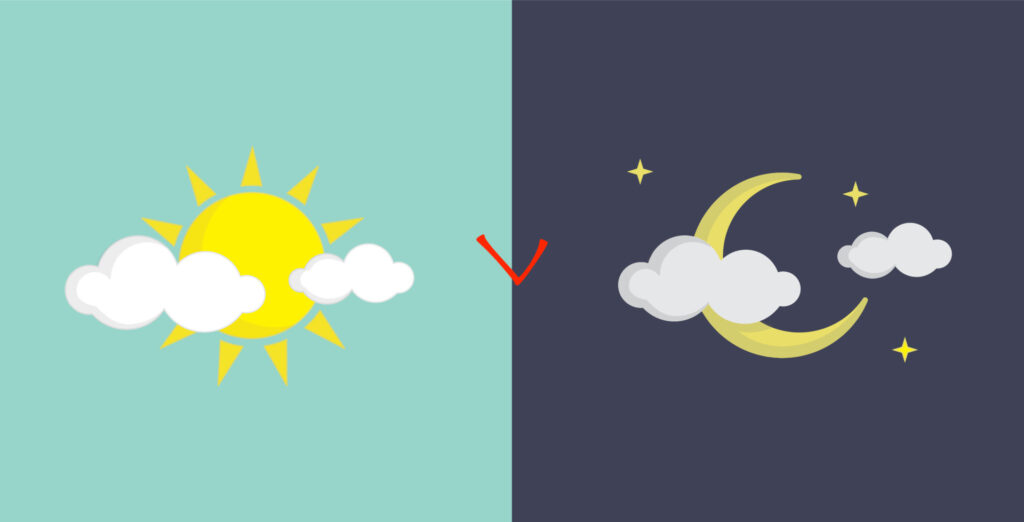
The lunar year begins in the spring, and the solar year begins in the fall. Both of which coincide with the equinox in its season. The lunar year, for example, begins with (or after) the spring equinox, while the solar year begins with the fall equinox.
(For more information on these topics, check out “Which New Moon Begins The Lunar Year?” and “Finding The True Sabbath On Enoch’s Calendar.”)
The lunar year, comprised of either 12 or 13 lunar months, is how we determine the feasts of our Creator (Passover, Pentecost, the Feast of Tabernacles, etc.).
The solar year, with 12 months and 364 days, is how we determine the weekly sabbath, weeks of years (every 7 years), and jubilee years (every 49 years).
That’s why I say the moon and the sun are distinct, but in sync. Their influence on the calendar may be different, but they overlap and remain in perfect harmony; never taking away from the importance of the other. The more you learn, the more in awe you’ll be.
Why the Lunar Year Begins in the Spring
This is a commonly accepted and understood truth, so I won’t spend too much time here. (If you’re more interested in the sun, keep scrolling.)
The feasts, or moedim, of our Creator are agricultural in their timing; and it’s the harvest times that help us know when they’re to be kept. I’m going to split the lunar year into two sections to help explain: the springs feasts and the fall feasts.
1. Passover / The Feast of Unleavened Bread / Pentecost
(the spring feasts)
Passover is on the 14th day of the 1st month, and the Feast of Unleavened Bread immediately follows from the 15th-21st. If we were to just look at the scriptures for this 7-day feast, it would be difficult to pin down exactly when the 1st month is. But when we pair it with the feast of Pentecost (the Feast of Weeks), it becomes clear.
From the middle of the Feast of Unleavened Bread (the “morrow after the sabbath”) until Pentecost is 7 weeks. The beginning of this count is marked by the first-fruits offering, when the children of Israel presented the first of their grain to the priest.
Leviticus 23:15-16 — 15 And from the morrow after the Sabbath, from the day that you brought the sheaf of the wave offering, you shall count for yourselves: seven completed Sabbaths. 16 Until the morrow after the seventh Sabbath you count fifty days, then you shall bring a new grain offering to יהוה. (The Scriptures)
Deuteronomy 17:9-10 — 9 Count seven weeks for yourself. Begin to count seven weeks from the time you begin to put the sickle to the grain. 10 And you shall perform the Festival of Weeks to יהוה your Elohim, according to the voluntary offering from your hand, which you give as יהוה your Elohim blesses you. (The Scriptures)
These scriptures are the keys we need to unlocking the spring door. The Feast of Unleavened Bread is in the season of the grain harvest. In the land of Israel, this begins in March or April with the barley harvest. The grain is planted the previous fall, then harvested in the spring. Thus, aligning the first of the harvest to the 1st lunar month, in the spring. Piece of cake… or, uh, barley.
2. Feast of Trumpets / Day of Atonement / Feast of Tabernacles
(the fall feasts)
The second witness is the Feast of Tabernacles, which begins on the 15th day of the 7th month. Precisely six lunar months after the Feast of Unleavened Bread. It’s also known as the Feast of Ingathering, because it occurs when the fruit of the land has been gathered. In other words: the fall.
Exodus 23:16b — and the Festival of the Ingathering at the outgoing of the year, when you have gathered in the fruit of your labours from the field. (The Scriptures)
Leviticus 23:39 — On the fifteenth day of the seventh month, when you gather in the fruit of the land, observe the festival of יהוה for seven days. On the first day is a rest, and on the eighth day a rest. (The Scriptures)
From these quick examples, I hope you can see that the lunar year (the moedim schedule) begins in the springtime. It’s fairly straightforward once you apply some harvest knowledge. Though brace yourself, because the solar year is going to require a little more work.
Why The Solar Year Begins in the Fall
This is the part that may surprise you. For starters, I know there’s many Torah observers that keep the feasts according to a solar calendar, which they begin at the spring equinox. At least they’re aligning the start of the feasts with the spring; but unfortunately, I believe the rest is incorrect. The feasts are in conjunction with the lunar months, not the solar.
(For more on that topic, check out “Solar v Lunar: A Biblical Calendar Debate.”)
But as I like to say: when you’re wrong, it’s alright. When it comes to the calendar we’re still learning, and the Father knows that we’re trying our best no matter when you’re keeping his feasts. The fact you’re even searching out this topic says it all.
Now, I’m going to give a few scriptures showing that there is indeed a beginning of the year in the fall. Then I’ll explain why the fall year is entirely solar. Thus, the spring is for the moon, and the fall is for the sun. Sound good?
Let’s go!
1. The Feast of Tabernacles
We’re back in the booth. There’s a couple interesting scriptures connecting the Feast of Tabernacles to the end of the year, but we’ll need to use some Hebrew to see it clearly.
Exodus 34:22 — And perform the Festival of Weeks for yourself, of the first-fruits of wheat harvest, and the Festival of Ingathering at the turn of the year. (The Scriptures)
The word for ‘turn’ is tequphah (תקופה). One of my favorite Hebrew words, too. It’s just fun to say. Te-qu-phah. Anyway. The tequphah, according to Strong’s H8622 is the…
1. coming around, circuit of time or space, a turning, circuit
a. at the circuit (as adverb)
I firmly believe the tequphah is what we call the equinox. It’s when the sun turns from one half of the sky to the other. From north to south, or south to north. Since we know that the Feast of Tabernacles is in the fall, we can also determine that the tequphah it’s nearest to is the fall equinox, and not the spring. And to be clear, this doesn’t mean it’s directly on the equinox, but during that timeframe.
To be fair, this scripture alone doesn’t prove that the solar year begins in the fall. There’s two tequphahs a year, after all. (“two tequphahs”… say that three times fast.) Who’s to say which one starts, and which one is the middle? But if we return to Exodus 23, we may have our answer.
Exodus 23:16b — and the Festival of the Ingathering at the outgoing of the year, when you have gathered in the fruit of your labours from the field. (The Scriptures)
The word for ‘outgoing’ is yatsa (יצא). Also fun to say, but it’s no tequphah. According to Strong’s H3318, yatsa is…
1. to go out, come out, exit, go forth
This is interesting, because it can be used as either the going or coming of something. In this current context, I believe it means the going of one year, and the coming of another. In short, the tequphah (fall equinox) of the Feast of Tabernacles is the start of a new year.
2. The Day of Atonement
While the Feast of Tabernacles may be more agricultural in nature, the Day of Atonement is not to be overlooked when it comes to the calendar. It has a profound impact on the timing of the solar year. Namely, when it comes to the jubilee year.
Leviticus 25:8-10 — 8 And you shall count seven Sabbaths of years for yourself, seven times seven years. And the time of the seven Sabbaths of years shall be to you forty-nine years. 9 You shall then sound a ram’s horn to pass through on the tenth day of the seventh month, on the Day of Atonement cause a ram’s horn to pass through all your land. 10 And you shall set the fiftieth year apart, and proclaim release throughout all the land to all its inhabitants, it is a Jubilee for you. And each of you shall return to his possession, and each of you return to his clan. (The Scriptures)
Have you ever wondered why they declared the jubilee year in the seventh month? May seem strange at first, declaring the most important year when it’s halfway done. That’s because they’re declaring the start of the solar year, not the lunar. Just like the Feast of Tabernacles, the Day of Atonement is aligned with the time of the fall equinox. The lunar year is the witness to the solar year beginning in the fall, which is quite remarkable.
This scripture is also important because it shows that the counting of years occurs in the fall, and not in the spring. So while the lunar months are important for keeping the feasts and agriculture, the solar year is how we keep track of where we are in history. It’s the biblical equivalent to the not-so-biblical January 1st. Oh, January 1st… how wrong you are.
The (Tequphah) Proof of a Solar Year
Still not convinced? Need another scripture connecting the solar year to the fall? You know what? So do I. Because the turning of the year could be referring to the midway point of the lunar year, could it not? Perhaps it’s not the equinox after all. I could see the possibility. But as it turns out (turn pun), the tequphah doesn’t apply to both heavenly parties. It’s a special event made only for the sun. And thanks to Psalm 19, we have the proof.
Psalm 19:4-6 — 4 Their line has gone out through all the earth, And their words to the end of the world. In them He set up a tent for the sun, 5 And it is like a bridegroom coming out of his room, It rejoices like a strong man to run the path. 6 Its rising is from one end of the heavens, And its circuit (ותקופתו) to the other end; And naught is hidden from its heat. (The Scriptures)
Here we have the writer singling out the sun, and he describes its circuit from one end of the heavens to the other — or, its ‘tequphah.’ This is why I believe the tequphah is only a solar event, and not a lunar one. Now let’s run with that thought for a moment, and see how it connects with the previous points in the article.
a. the tequphah is a solar event.
b. the Feast of Tabernacles occurs in the fall, and at the time of the tequphah (Exodus 34:22).
c. the Feast of Tabernacles is also said to occur at the going/coming of the year (Exodus 23:16).
d. Therefore, since we know that the lunar year arrives in the spring, by process of elimination the year that begins in the fall must be solar.
Now, add all these points together and I believe it becomes clear that the tequphah is referring to the equinox; and it’s the fall equinox that starts the solar year. The day of the fall equinox, to be exact (not before, and not after). When the sun’s path splits the middle of the sky, it’s day 1 of the year. From here, count to 7, and we have our weekly sabbath for that solar year (until the fall equinox of the next year).
There’s a lot to unpack in that last statement. Connecting the sabbath to the solar year is a topic in and of itself. And because it’s so very important that we get it right, I wrote a separate article you can read here.
“Finding The True Sabbath On Enoch’s Calendar.”
I’ll explain why the sabbath occurs when it does, and show how Passover (yes, Passover) proves it’s yearly location on the calendar. You don’t want to miss this.
But What About Enoch?
This section is for my fellow Enoch scholars…
I’ve studied the luminaries section in the book of Enoch more times that I can count. The first chapter of which (71 or 72, depending on the translation) is all about the sun, and the gates it enters throughout the year. It’s too long a chapter to post here, but in case you haven’t read it yet, it’s quite fascinating. Though it could be confusing the first couple of reads.
I bring this up because Enoch is quite clear that the solar year begins in the spring. The daylight increases from the 1st to the 3rd solar months, as the sun moves from the 4th, to the 5th, to the 6th gate. Then, it reverses its course, eventually reaching the dark days of winter in the 9th month, and in the 1st gate. I believe this all to be true.
Then why am I contradicting Enoch by saying the solar year begins in the fall?
My response: how do we know Enoch was writing from a northern hemisphere perspective? Is it possible he was writing from the southern hemisphere? Let’s examine.
If the book of Enoch, or at least the luminary section, is written from a southern hemisphere point of view, his calendar would align perfectly to a fall equinox/September startup. Because as you’re probably aware, the seasons of the north and south are opposite one another.
Also, how do we know where Enoch spent his days? It’s easy to assume he lived in the middle east, since that’s where most of the bible takes place. But we really don’t know for sure, do we? Same goes for everyone else before the flood. Noah, for example, may have exited the ark on Mount Ararat, but where did his voyage begin? There’s a brain teaser.
All I’m saying is this: when scripture makes it clear that the year begins in the fall, I’m not going to let Enoch sway that truth. Even though I rely on Enoch as much as anybody, I do my best to take all sides into consideration. Because sometimes we have to leave our perspectives at the door to reach a grander truth. And for me, as someone born and raised in the northeast United States, I eventually had to consider that maybe Enoch wasn’t writing to me and my geography. Just maybe.
So where did Enoch live? Was he kickin’ it with kangaroos in the Outback? Or was he just kicked back on a beach in Cape Town? I’m going to need your help to figure this one out. Come on — we can do it!
Now for those of you who actually are living in the southern hemisphere, you may have been wondering if the biblical year and feasts begin at a different time for you, to match the harvest schedule. If so, I want to give you my perspective. Check it out here.
“Do The Northern And Southern Hemispheres Keep The Biblical Feasts Together?”
Solstices on the Enoch Calendar
While we’re speaking of Enoch, there’s one more argument I’d like to make concerning a fall (September) solar start. The solar chapter (72 or 73) speaks of the summer and winter solstices. A time when the day has 12 parts and the night 6 parts, or vice versa (12:6 or 6:12). They are said to occur in the 6th and 1st gates, and sometime before days 92 and 274 of the year. Here’s a table of what that looks like, with the mentioned gates italicized.
THE SOLSTICES WITH A FALL EQUINOX START
GATE 4: Days 1 – 30 (10:8) | GATE 3: Days 183 – 212 (8:10) |
GATE 5: Days 31 – 60 (11:7) | GATE 2: Days 213 – 242 (7:11) |
GATE 6: Days 61 – 91 (12:6) | GATE 1: Days 243 – 273 (6:12) |
GATE 6: Days 92 – 121 (11:7) | GATE 1: Days 274 – 303 (7:11) |
GATE 5: Days 122 – 151 (10:8) | GATE 2: Days 304 – 333 (8:10) |
GATE 4: Days 152 – 182 (9:9) | GATE 3 : Days 334 – 364 (9:9) |
The first time the sun is in Gate 6, from days 61-91, the length of day is double that of the night (12:6). Which means that the summer solstice occurs in this period.
Likewise, the first time the sun is in Gate 1, from days 243-273, the length of night is double that of the day (6:12). Hence, the winter solstice.
If you begin the year with the fall equinox, there’s no problems. The solstices will align in their proper gates. I’m going to use the average dates of September 23rd (fall equinox), December 21st (winter solstice), and June 20th (summer solstice) to show the count.
Day 1 / September 23rd — December 21st = 90th day
Day 1 / September 23rd — June 20th = 272nd day
As you can see, the count is accurate to the gates of the Enoch calendar. But what happens when we begin the year with the spring equinox? Here, I’ll be using the average date March 20th for the spring equinox.
Day 1 / March 20th — June 20th = 93rd day
Day 1 / March 20th — December 21st = 277th day
Uh-oh. Now we have a problem. The shift of 3-5 days pushes the solstices into the wrong gate. Well, technically they’re still in the 6th and 1st gates, but they’re now in the 2nd portion of them, and not the first. When the day/night ratio is 11:7 and 7:11, instead of 12:6 and 6:12.
THE SOLSTICES WITH A SPRING EQUINOX START
GATE 4: Days 1 – 30 (10:8) | GATE 3: Days 183 – 212 (8:10) |
GATE 5: Days 31 – 60 (11:7) | GATE 2: Days 213 – 242 (7:11) |
GATE 6: Days 61 – 91 (12:6) | GATE 1: Days 243 – 273 (6:12) |
GATE 6: Days 92 – 121 (11:7) | GATE 1: Days 274 – 303 (7:11) |
GATE 5: Days 122 – 151 (10:8) | GATE 2: Days 304 – 333 (8:10) |
GATE 4: Days 152 – 182 (9:9) | GATE 3 : Days 334 – 364 (9:9) |
For me, this is just another reason why the solar year begins in the fall (September). The alignment of seasons fits perfectly on the Enoch calendar when starting then, whereas a start on the spring equinox (March) does not.
Final Note
Enoch also speaks of equal day and equal night (9:9), which occurs in Gates 4 & 3. Personally, I don’t think this 9:9 split lands the same day as the equinoxes, but roughy 2 days before fall equinox and 2 days after the spring equinox. I’ll give a full breakdown to that reasoning another time; but for now, I wanted to mention this for those who may have wondered how I could place the fall equinox in Gate 4 (10:8), rather than Gate 3 (9:9).
But while I think the equinox and the 9:9 split are a couple days apart, I don’t feel that’s the case with the solstices. The furthest point the sun travels north or south is also the moment of most or least sunlight (12:6 or 6:12). This is why I feel fairly confident that they must land in the gates I’ve described.
And that, my friends, is my list of reasons why the solar year begins in the fall, and on the fall equinox.
Thank you so much for reading. And until next time… stay in that thin gate.
— Daniel A., Creator of ThinGate.org